
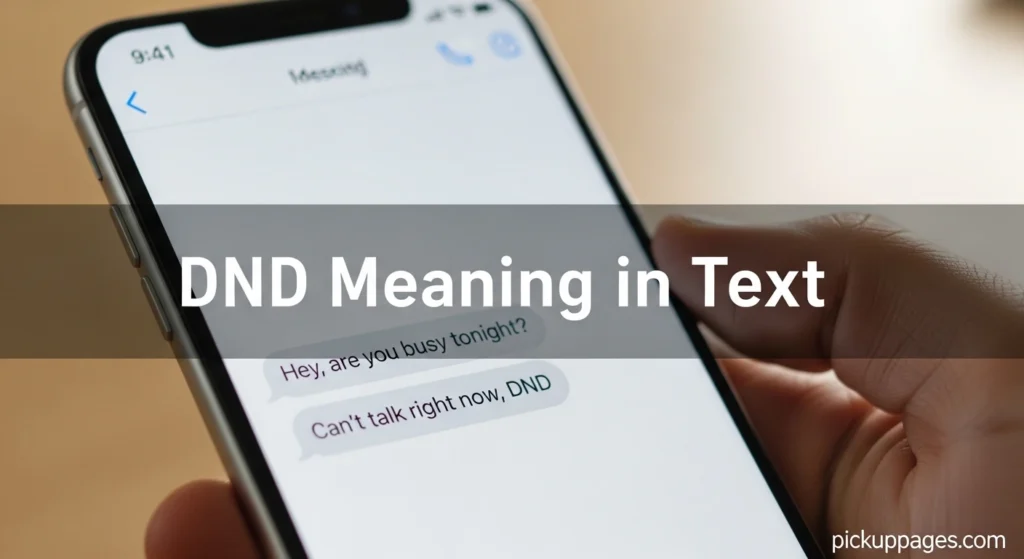
If you’ve ever seen “DND” in a message or on someone’s phone status and wondered what it means, you’re not alone. Many people search for “dnd meaning in text” because modern messaging is full of short forms and abbreviations that can be confusing at first.
In today’s fast digital world, people use texting slang to save time and communicate quickly. Understanding these short forms helps you avoid misunderstandings and respond correctly in conversations. Whether you’re chatting with friends, using social media, or checking phone settings, knowing the meaning of DND makes communication smoother. In this guide, you’ll learn the full form of DND, how it’s used in texting, where it came from, real-life examples, and how to reply confidently when someone mentions DND in a message.
What Does DND Mean in Texting and Online Chat?
The dnd meaning in text usually refers to a request not to be disturbed.
DND Full Form in Text
DND = “Do Not Disturb”
This phrase is commonly used to indicate that someone does not want to be interrupted or is busy.
Short Meaning of DND
In simple terms, DND means “Don’t disturb me right now.”
People use DND when they:
- Are busy working or studying
- Want quiet time
- Are sleeping
- Need privacy
- Have activated the phone’s Do Not Disturb mode
Simple Meaning Examples
- “On DND right now.” → Means: I don’t want interruptions.
- “Sorry, my phone was on DND.” → Means: I didn’t see your message because notifications were off.
- “Put your phone on DND during class.” → Means: Turn on Do Not Disturb mode.
Origin and Rise in Popularity of DND
The phrase Do Not Disturb existed long before texting, but its abbreviation became popular with mobile technology.
Where Did DND Come From?
DND originated from:
- Hotel door signs that read “Do Not Disturb”
- Phone features that silence notifications
- Messaging apps and smartphone settings
As smartphones became common, DND became widely used to describe the silent or focus mode on devices.
Why DND Became Popular
Several factors contributed to its popularity:
- Smartphone features: Most devices include DND mode
- Busy lifestyles: People need quiet time
- Work-from-home culture: Focus time became important
- Short and easy to type
Today, DND is both a slang term and a technical feature name.
How DND Is Used in Real Conversations
Understanding examples helps you see how dnd meaning in text works in real chats.
Natural Chat Examples
Example 1: Friend 1: “Why didn’t you reply?” Friend 2: “Sorry, my phone was on DND.”
Example 2: Student: “Going to study now, DND.” Friend: “Okay, talk later.”
Example 3: Person A: “Can you call me?” Person B: “Not now, DND.”
Example 4: Message: “Put your phone on DND during the meeting.”
Situations Where DND Is Common
People use DND when:
- Studying
- Sleeping
- Working
- Attending meetings
- Needing focus time
DND Meaning on Different Social Media Platforms
The dnd meaning in text remains similar across platforms, but its use depends on context.
DND Meaning on WhatsApp
On WhatsApp, DND often refers to status updates or availability.
Common Uses:
- Informing others you are busy
- Explaining delayed replies
- Setting quiet time
Example:
- “Phone on DND, reply later.”
DND Meaning on Instagram
On Instagram, DND appears in messages or story captions.
Common Uses:
- Showing focus time
- Indicating offline mode
- Sharing personal boundaries
Example:
- “DND mode tonight.”
DND Meaning on TikTok
The meaning on TikTok is usually related to focus or quiet time.
Common Uses:
- Talking about productivity
- Showing daily routines
- Sharing study habits
Example:
- “Putting phone on DND while studying.”
DND Meaning on Snapchat
On Snapchat, DND is used to explain slow responses.
Common Uses:
- Explaining missed messages
- Indicating sleep or study time
Example:
- “Was on DND, just saw your snap.”
Other Meanings of DND (Unrelated to Slang)
Although DND usually means Do Not Disturb, it has other meanings in different contexts.
Non-Slang Meanings of DND
- DND = Do Not Disturb (phone feature)
- DND = Dungeons & Dragons (role-playing game)
- DND = Department of National Defence (government abbreviation)
- DND = Digital Network Device (technology term)
Important Reminder
In texting conversations, DND almost always means “Do Not Disturb.”
Common Confusions and Wrong Interpretations
Some people misunderstand DND, especially when reading messages quickly.
What DND Does NOT Mean
- ❌ Done
- ❌ Did Not Do
- ❌ Do Not Decide
These meanings are incorrect in most texting situations.
Why Confusion Happens
Confusion usually happens because:
- Letters look similar to other abbreviations
- Context is missing
- People assume meanings without checking
Always read the full message to understand correctly.
Similar Slang Terms and Related Abbreviations
Learning related slang helps you understand conversations better.
Related Slang Terms
- BRB – Be Right Back
- AFK – Away From Keyboard
- OOO – Out Of Office
- TTYL – Talk To You Later
- IDLE – Not active online
These phrases are often used in similar contexts.
Alternatives to DND
Instead of DND, people may say:
- “Busy right now”
- “Can’t talk”
- “Do not disturb”
- “In focus mode”
These alternatives have similar meanings.
How to Reply When Someone Says DND
When someone says DND, they are usually indicating that they are busy or unavailable.
Polite Responses
Use these when you respect their time.
- “Okay, talk later.”
- “No problem.”
- “I’ll message you later.”
- “Take your time.”
Friendly Responses
Use these in casual chats.
- “Got it!”
- “Alright, catch you later.”
- “Okay, see you soon.”
- “Talk when free.”
Flirty Responses
Use only in playful situations.
- “Okay, I’ll wait 😉”
- “Don’t stay busy too long 😄”
- “Come back soon!”
Boundary-Respecting Responses
Use these when you also want to respect limits.
- “Understood.”
- “Message me when free.”
- “I won’t disturb you.”
- “Talk later.”
These responses show understanding and respect.
Is DND Still Popular? Current Trends and Gen-Z Usage
Slang changes quickly, so it’s helpful to know if DND is still used.
Is DND Still Used?
Yes, DND is still widely used, especially because it is linked to smartphone features.
Current Trends
- Common in productivity discussions
- Popular among students
- Used in work settings
- Linked to focus and quiet time
DND in Gen-Z Culture
Gen-Z users often use DND when:
- Studying
- Sleeping
- Avoiding distractions
- Setting boundaries
It remains a practical and modern term.
When Should You Use DND in Messages?
Knowing when to use DND makes communication clearer.
Best Situations to Use DND
Use DND when:
- You need focus time
- You’re busy studying
- You’re sleeping
- You want quiet time
When NOT to Use DND
Avoid using DND in:
- Formal reports
- Official documents
- Professional presentations
- Academic essays
Use full phrases instead.
Tone and Context: How DND Can Feel Different
Tone changes how DND is understood.
Friendly Tone
“Going on DND now.” → Casual and polite.
Serious Tone
“DND during meeting.” → Professional and firm.
Relaxed Tone
“Phone on DND tonight.” → Informal and calm.
Understanding tone helps avoid misunderstandings.
Why Learning Slang Like DND Matters
Learning the dnd meaning in text helps improve communication.
Benefits of Understanding Slang
- Helps you understand messages faster
- Reduces confusion
- Improves texting skills
- Supports clear communication
- Keeps you updated with digital trends
Understanding common slang makes online communication easier.
FAQs
What does DND mean in text messages?
DND means “Do Not Disturb,” which indicates that someone is busy or does not want interruptions.
What is the full form of DND in texting slang?
The full form of DND is “Do Not Disturb.”
What does DND mean on TikTok?
On TikTok, DND usually refers to Do Not Disturb mode, often related to focus or productivity.
Is DND a phone feature or slang?
DND is both a phone feature and a commonly used texting abbreviation.
How do you reply when someone says DND?
You can reply with “Okay,” “Talk later,” or “Message me when free.”
Conclusion
Understanding the dnd meaning in text helps you communicate clearly and respect others’ time in digital conversations. In most situations, DND stands for “Do Not Disturb,” meaning someone is busy or does not want interruptions. It is commonly used across messaging platforms like WhatsApp, Instagram, TikTok, and Snapchat, as well as in smartphone settings.
By learning what DND means, how it’s used, and how to reply politely, you can confidently handle conversations that include this abbreviation. As modern communication continues to evolve, knowing common terms like DND helps you stay organized, respectful, and connected in today’s fast-paced digital world.